

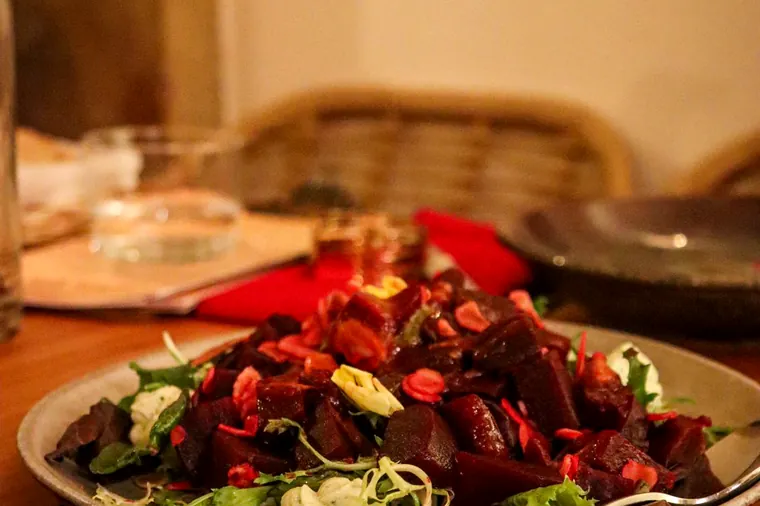
A petisco is not a tapa. The Spanish tapa began as something that came with a drink, often given away with it. The Portuguese petisco is proper food, served in a small portion so that you can order many across an evening. The difference is one of intent.
Amêijoas à Bulhão Pato
The dish is named after a poet who did not invent it.
Raimundo António de Bulhão Pato published his first book of poetry in 1850 and never reached the fame he wanted. Eça de Queirós caricatured him in Os Maias, as Tomás de Alencar, the romantic poet overtaken by his own century.
The man who put his name on the clams was João da Mata, head chef at the Hotel Central in Lisbon and a declared admirer. Bulhão Pato was himself a gastronome, and recipes of his were published in the press of the day, among them a hare that also ended up carrying his name.
There are four ingredients: clams, olive oil, garlic and coriander. A little lemon. Nothing else goes in, and that is where one version is told from another.
Peixinhos da horta, and what they gave the world
Green beans in fried batter, served hot. It is one of the oldest petiscos known in Portugal and was being eaten long before there were restaurants.
The Portuguese missionaries and traders who reached Japan in the sixteenth century took the technique with them. They ate battered fried vegetables on days of abstinence from meat, the têmporas, and that word is the accepted origin of the name tempura.
Japanese tempura is now a world of its own, with its own technique and its own discipline. It started with a plate of green beans.
Pataniscas, pica-pau, moelas
A patanisca is shredded salt cod in a flour and egg batter, fried in loose spoonfuls. It takes leftover bacalhau and turns it into food for a full table.
Pica-pau is cubed meat, sautéed with garlic and white wine, served with toothpicks so that everyone spears at it. The name comes from the gesture.
Gizzards stewed in tomato and wine are the petisco that separates people who know Portuguese cooking from people who are visiting it. A gizzard is a bird's stomach, a hard muscle that needs slow stewing to soften.
The order to order in
Petiscos are not ordered all at once. You order one or two, eat them, and order again. The table changes through the evening instead of filling up in one go.
The usual order runs cold to hot and light to heavy. Cheese, olives and presunto first. Then whatever comes out of the fryer, peixinhos da horta or pataniscas. Then the stews, gizzards or pica-pau. Clams come in whenever you want them, because they clear the palate.
Bread and olives arrive without being ordered and are charged separately. Anyone who does not want them sends them back, and that is normal.
Cheese, presunto, and what comes before everything
Serra da Estrela cheese is made with raw sheep's milk and set with thistle flower rather than animal rennet. That is why it goes soft enough to eat with a spoon, by cutting off the top. It carries a protected designation of origin and it has a season: it is made from November to March.
Presunto comes mainly from two areas, Chaves and Barrancos. The Barrancos one is from Alentejo pigs raised in cork oak pasture and fattened on acorns, and the price says so.
These two are ordered at the start and stay on the table all evening. They do not suffer from sitting, unlike anything that comes out of the fryer.
What to drink
With fried petiscos and with clams, a cold white with enough acidity to cut the fat. A Vinho Verde from Loureiro, or an Arinto, does that job without imposing itself.
With the stewed meats, a light red served cool rather than at room temperature. A heavy red covers the food.
Before the fado
You eat first and listen afterwards, for a practical reason: nothing is served while anyone is singing, so that there is no clatter of plates over the guitar.
The Chiado house serves petiscos à la carte, with a minimum spend of 40 euros per person, deductible against food and drink. Alfama serves a dinner menu by Chef António Saraiva. Tables can be booked here.